Gum Disease Treatment – Rowley, MA
Helping Your Infected Gums Heal

When the bacteria in your mouth infects your gums and the bone that supports your teeth, you are suffering from gum disease (sometimes called periodontal disease). About three-quarters of adult tooth loss is linked to periodontal disease, but fortunately, Dr. J. Peter St. Clair has a few options for gum disease treatment in Rowley, MA to help stop the infection.
Why Choose J. Peter St. Clair, DMD for Gum Disease Treatment?
- Advanced Techniques for Detecting Gum Disease Early
- Welcoming Environment for Patients of All Ages
- Focus on Down-to-Earth Care
Scaling & Root Planing
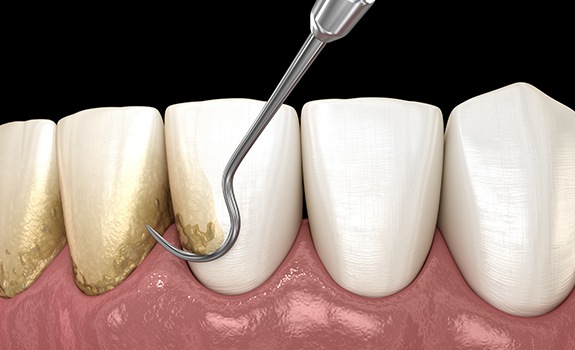
To stop an ongoing infection in the gums, plaque and tartar have to be removed from every surface around and below your gum line. This is done through a process called scaling. Afterwards, root planing is performed to smooth the tooth roots, encouraging the gum tissue to reattach itself while lowering the risk of more bacteria accumulating in the area (which could cause the infection to worsen again). Together, scaling and root planing are called “deep cleaning.”
What is an Ongoing Gum Infection?
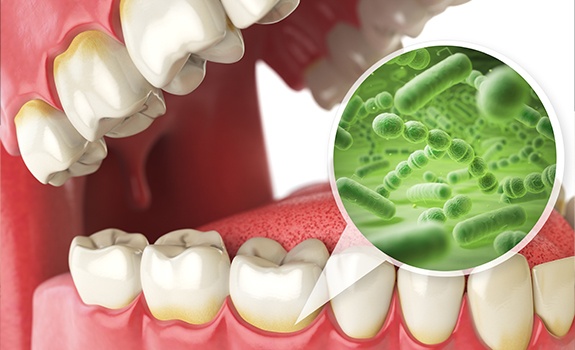
Unlike an infection under your skin, gum disease does not normally go away on its own. For infections elsewhere in the body, the harmful bacteria might stay where they are for a few days, but they’ll eventually be driven out by your immune system. But gum disease is an ongoing infection, meaning your immune system is no longer able to stop it. When this occurs, deep pockets of infection will develop around your teeth.
Should I Get My Periodontal Infection Treated Right Away?

If you have gum disease, your resistance to periodontal bacteria is already weakened. The infection will only grow worse over time, typically in “bursts” of activity. Your teeth will lose more and more of the support that keeps them in place. There are numerous factors that can cause gum disease to develop or worsen, including poor oral hygiene, the formation of plaque, smoking, genetic factors, stress or tension, diet, age, and illness. Call us right away if you notice the warning signs of gum disease or any indication that your condition is growing worse. Regular cleanings might help during the earliest stage of the disease, but deep cleaning techniques are normally required once the situation becomes more severe.
Learn More About the Consequences
What are the Symptoms of Periodontal Disease?
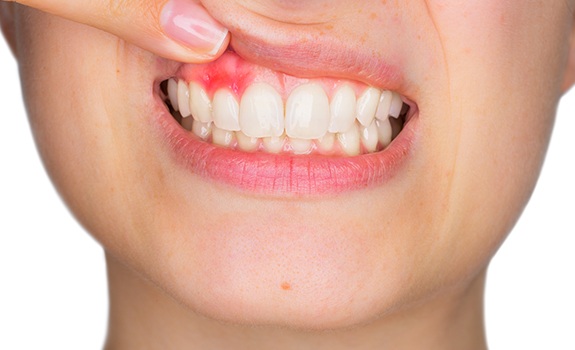
Gum disease is normally found during routine examinations since the infection is normally painless until later on. That’s not to say you might not notice some key symptoms that could tell you that something is wrong. You could have gum disease if:
- Your gums are red or swollen
- You bleed while brushing or flossing
- Your gums become aching, sore, or tender
- Your teeth have begun to look longer
- You have persistent bad breath
Again, it should be noted that these symptoms may not appear until your gum disease has become severe enough to eventually cause tooth loss. If you have any reason to doubt your gum health, ask your hygienist or Dr. St. Clair for a periodontal evaluation. Remember, deep infected pockets might be present in your mouth even if the gums look completely normal.
Periodontal Treatment Options

In addition to scaling and root planing, there are several treatment options for gum disease. A minor surgical procedure can be performed if the infection has reached a point below where deep cleaning can reach. Also, if the bone tissue has been destroyed, we can rebuild it with a bone grafting procedure. Soft tissue grafting can cover the roots of the teeth that were exposed after gum recession, and antibiotic therapy continues to fight against bacteria even after scaling and root planing are performed.
Learn About Our Treatment Options
Gum Disease Treatment FAQs
Will I eventually lose my teeth with gum disease?
Discovering you have gum disease can be extremely alarming, especially if you’ve heard that it can eventually cause permanent tooth loss. The good news is that if you only have the beginning stage known as gingivitis, you can easily reverse the condition and preserve your smile.
Unfortunately, however, as with most dental problems, if they aren’t treated promptly, they tend to get worse. This means that yes, you could eventually lose your teeth from gum disease, but even this can be stopped.
The reason people lose teeth with periodontitis is because their gum tissue deteriorates to the point where it can no longer hold their teeth in place in the jawbone. Thus, to prevent this, it is important to seek gum disease treatment in Rowley as soon as possible.
Can I live a normal life with gum disease?
The effects of gum disease can be permanent, and very harmful to your overall health and quality of life. Not only does this condition result in unsightly gum recession, but it can also cause permanent tooth loss and jawbone deterioration. This can in turn make everyday activities like eating, speaking clearly, and smiling a challenge.
The good news is that with gum disease treatment in Rowley, you can still live a normal life. If you have experienced tooth or bone loss, Dr. St. Clair can help restore them with bone grafting, dental implants, bridges, or dentures.
Following your gum disease treatment, it is important to understand that this infection can and very likely will come back if you don’t maintain excellent oral hygiene practices going forward. This means you should be brushing your teeth twice a day, flossing daily, and visiting Dr. St. Clair at least every six months for your regular checkups and cleanings.
How long will I have to take antibiotics to treat gum disease?
Antibiotic therapy is a safe, effective way to eliminate oral infection in the gums. How long you’ll need to receive this gum disease treatment in Rowley will depend on how severely infected your gum tissue is, the type of antibiotic Dr. St. Clair uses, and of course, your adherence to the aftercare instructions following your treatment.
Most patients take antibiotics for about one to two weeks, but please be aware that even if your gums look and feel much better before you’ve completed your medication, it is imperative that you finish the entire course. If you cut your treatment short, your infection may return, and you could even develop a resistance to the antibiotic.
If you have any questions or concerns about your medication, be sure to contact Dr. St. Clair for guidance.
What’s the best way to prevent gum disease?
Although it can be extremely difficult to get rid of, the good news is that preventing gum disease is very easy! The best way to go about it is to maintain an excellent oral hygiene routine, including brushing your teeth twice a day, flossing daily, and visiting Dr. St. Clair for your regular, preventive dental checkups and cleanings.
If you struggle to maintain good oral health due to dexterity or other issues, let Dr. St. Clair know so he can help brainstorm some ways to help make this easier for you.
Other factors that will likely increase your risk of gum disease include things like smoking, certain medical conditions, and a poor diet. If any of these apply to you, reach out to Dr. St. Clair or your primary care physician for help!