J. Peter St. Clair, DMD, PC

THE ORAL-SYSTEMIC LINK (3/3)

August 7, 2023

If you missed Part 1 and/or 2 of this series, you can find it at www.thetowncommon.com.

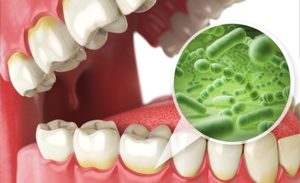
I have been writing the past couple weeks about the growing evidence that links oral and systemic disease, and the need for more collaboration between dentists and physicians. All of this, of course, is in the best interest of the patient.

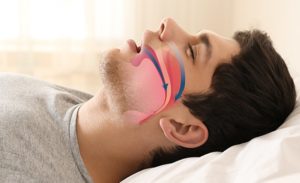
The discussion has been primarily about gum disease and its relationship with systemic disease. The body is a complex system – and everything is connected. In addition to the need for dentists and MD’s to collaborate more on the oral/systemic connection, we also need to collaborate better about our patient’s sleep problems. 

As part of a comprehensive… (Read More)

THE ORAL-SYSTEMIC LINK (2/3)

July 31, 2023

If you missed Part 1 of this series, you can find it at www.thetowncommon.com.

I ended last week with a statement that I have used numerous times before – just because it doesn’t hurt doesn’t mean there isn’t a problem. We keep learning more and more about the link between the mouth and the rest of the body. It is essential that dentists and physicians do a better job at co-managing patients, and learn more about the relationship between oral and systemic disease.

It is clear that if you want to take better care of yourself, you need to take better care of your mouth. Familial history is very important. If you know of… (Read More)

THE ORAL-SYSTEMIC LINK (1/3)

July 24, 2023

The connection between oral health and systemic health is well-established and ever-evolving. One thing we know for certain; we are living longer, but with more chronic diseases and medication than ever before.

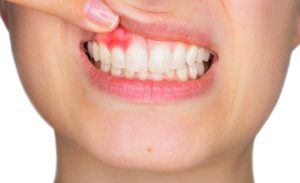
The latest statistics are alarming. Forty-seven percent of US adults who are age 30 or older – an estimated 64.7 million Americans – have either mild gum disease (8.7%), moderate gum disease (30%) or severe gum disease (8.5%). As the population ages, the prevalence rises with 70% of individuals over the age of 65 exhibiting some level of gum disease. And, since we are on statistics, by 2030, it is estimated that the number of people over 70 years of age will have… (Read More)

IT’S YOUR CHOICE

July 17, 2023

Our lives are a series of choices. If we feel we don’t have a choice in a particular situation, think again. We usually do have a choice because our actions are based on how we think. How we think is a choice. While not necessarily easy, we can choose to think differently. 

I am going to use dental insurance as an example, since this is supposed to be a dental column. Dentists hear all the time, “My insurance only covers ____”, or “My insurance says they don’t cover that”, or “My insurance company says I can only see a dentist on their list”, or “I can’t do that because I don’t have insurance.” The response… (Read More)

DENTURE MAINTENANCE

July 10, 2023

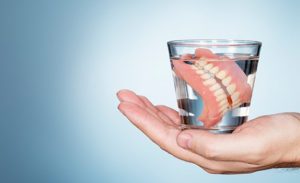
Contrary to what many denture-wearers believe, dentures require regular maintenance, including relines, repairs, and replacement. In fact, the average denture should be relined every two to three years and replaced every five to seven years for the most optimal fitting prosthesis. There are many reasons for this maintenance interval and for regular dental examinations, whether or not the patient perceives any problem.

The first problem has to do with the basic function of the bone surrounding natural teeth. Natural teeth are held in their sockets by thousands of “cables”, called the periodontal ligament that tug and pull on the supporting bone during function. The bone is designed to be strengthened and stimulated in this manner.… (Read More)

EVERYTHING IS CONNECTED

July 3, 2023

Disease is defined as, “a disorder of structure or function in a human, animal, or plant, especially one that produces specific signs or symptoms or that affects a specific location and is not simply a direct result of physical injury.” Symptoms are those which are felt and signs are those which are seen. Disease may show signs but no symptoms. Two areas dentists see signs of, often without symptoms, are bruxism (grinding)/clenching and GERD or gastroesophageal reflux disease, causing chemical erosion of the teeth.

Some people present with symptoms relating to these two issues, but more often than not, people do not have symptoms. Dental patients who present with signs of tooth wear or acid… (Read More)

WHAT’S THE BEST ?

June 26, 2023

There have been lots of changes over time in the materials used to restore teeth. Many of the materials I use today were not in existence when I started to practice. The most significant changes have been to materials that are tooth-colored.

There are very few patients who ask for gold or silver fillings any more. And, while some of these newer materials are tooth colored, there are factors which need to be considered in determining what material is appropriate for each individual situation. The longest lasting restorations I have ever seen are gold done by dentists who really knew the art of working with gold.

As I said last week – The… (Read More)

WHAT’S IN YOUR MOUTH?

June 19, 2023

Dentistry is full of old, new, and emerging technology. For example, the different ways to use dental implants over the last 30 years has been a major game changer in the field of dentistry. Likewise, CAD/CAM technology (computer-aided design and manufacturing of dental restorations) has seen steady growth over the same 30 years. Here is a little background on the some of the reasons this technology is here to stay.

Let me start by saying that the best dentistry is NO dentistry. Prevention of decay and other destructive things that happen to teeth is the best line of defense. Having said that, the fact of the matter is, there are many people who need things… (Read More)

VISUALIZE CHANGE

June 12, 2023

I remember seeing a commercial for a cholesterol medication in which the person playing the doctor says, “I wish my patients could see what I see.” I think there are two ways to look at that statement.

The commercial showed an image of animated artery walls clogging with particles of plaque clinging to one another, making the opening of the artery smaller and smaller. This is a visual that is easy to understand.

The second, and more subtle way to take this statement, is the doctor wishing that patients could see what happens to people over time, with and without compliance to taking medication or changing their diet. If patients could only understand and use… (Read More)

Summer Foods You Can Enjoy with Dental Implants

June 9, 2023

Happy man at barbequeIf you’ve recently invested in dental implants, you’ve made a wise decision. You can enjoy many summer foods you might have avoided, thanks to your new teeth. Dental implants are unlike any other tooth replacement method because they have the support of your jawbone to regain 70% of your natural biting force. Although you can eat just about anything, your implant dentist recommends a few precautions to protect your investment.
(more…)