
If you have sleep apnea, it’s likely that you feel pretty exhausted throughout the day. In fact, daytime sleepiness is one of the most common warning signs of this sleep condition! It may seem pretty tempting to take a nap to catch up on your sleep, but experts say don’t do it! Napping could be problematic for people who are already struggling to get quality sleep at night, and could potentially even make you more tired. Read on as we go over why you may want to consider avoiding naps, especially if you have sleep apnea.
June 17, 2021
June 14, 2021
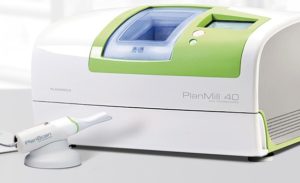
I’m sure we all agree that keeping up with technology is not easy. From computers to cell phones to cars, and everything in between, changes take place at lightning speed. No matter what we buy, there is always something right around the corner, or already there, that is better.
I purchased a digital x-ray system back in January of 2008. By June of the same year, the same company came out with a smaller, thinner sensor. This didn’t make mine obsolete, but made me mad because my $10,000 investment made six months before could now be purchased for half the price.
As with most, if not all industries, technology is sweeping the dental field. We… (Read More)
June 7, 2021

Contrary to what many denture-wearers believe, dentures require regular maintenance, including relines, repairs, and replacement. In fact, the average denture should be relined every two to three years and replaced every five to seven years for the most optimal fitting prosthesis. There are many reasons for this maintenance interval and for regular dental examinations, whether or not the patient perceives any problem.
The first problem has to do with the basic function of the bone surrounding natural teeth. Natural teeth are held in their sockets by thousands of “cables”, called the periodontal ligament that tug and pull on the supporting bone during function. The bone is designed to be strengthened and stimulated in this manner.… (Read More)
June 1, 2021
Disease is defined as, “a disorder of structure or function in a human, animal, or plant, especially one that produces specific signs or symptoms or that affects a specific location and is not simply a direct result of physical injury.” Symptoms are those which are felt and signs are those which are seen. Disease may show signs but no symptoms. Two areas dentists see signs of, often without symptoms, are bruxism (grinding)/clenching and GERD or gastroesophageal reflux disease, causing chemical erosion of the teeth.
Some people present with symptoms relating to these two issues, but more often than not, people do not have symptoms. Dental patients who present with signs of tooth wear or acid… (Read More)
May 24, 2021
Last week I introduced you to a patient who has been struggling with dental decay (cavities), gum recession, and dental erosion (the chemical breakdown of tooth structure). I discussed how these dental problems are complex multifactorial diseases of epidemic levels affecting both children and adults.
I ended with the idea that a healthy mouth requires more than brushing, flossing, and “fillings”. With current scientific evidence and new technologies, patients and practitioners need to begin to look at these problems not just from a drilling and filling approach, but also from a medical (preventive/therapeutic) approach. If “we” continue to think the same way about dental issues, we will continue to have the same struggles and same… (Read More)
May 17, 2021
Changing our behavior, habits, attitude, or any aspect of our lives can be a difficult thing to do. I am not writing as an expert on this subject as I have the same struggles as everyone else with change. However, repeated awareness of changes we want to make is one strategy to move us closer to making that change.
A good example is Mary, a patient of mine. Mary is an adult who has had issues with decay (bacterial disease that breaks down tooth structure), dental erosion (chemical breakdown of tooth structure), and gum recession (loss of the supporting structures of the teeth). When people like Mary present with these problems, we dentists present treatment… (Read More)
May 10, 2021
Do you pay much attention to those cards in a hotel room asking you to reuse your towels? Many people don’t. But one researcher, Robert Cialdini, a University of Phoenix professor and the author of Influence: The Psychology of Persuasion, found a way to get guests to cooperate. He created a card saying that most guests who stayed “in this room” reused their towels. The response beat the typical compliance rate by 33 percent.
Cialdini calls this the “Social Proof Effect,” and it is a powerful force in our increasingly connected culture. It’s not about peer pressure. It’s about peer information, and how we behave and make decisions based on the standards, expectations, and recommendations… (Read More)
May 4, 2021
I have had a few patients ask recently about the order of oral hygiene activities. Does it matter if you brush or floss first, and should this be done before or after breakfast? Based on available research, it seems opinion matters as much as scientific facts.
A spokesman for the American Dental Association and a professor of restorative dentistry at the University of California, Los Angeles, recommends flossing first. His rationale? Get the unpleasant task out of the way to avoid the temptation to not do it. “Let’s face human nature, if you’re going to skip one, which one will you skip?”
By contrast, a professor of oral health sciences at the University of Washington… (Read More)
April 26, 2021
I have had a few patients ask recently about the order of oral hygiene activities. Does it matter if you brush or floss first, and should this be done before or after breakfast? Based on available research, it seems opinion matters as much as scientific facts.
A spokesman for the American Dental Association and a professor of restorative dentistry at the University of California, Los Angeles, recommends flossing first. His rationale? Get the unpleasant task out of the way to avoid the temptation to not do it. “Let’s face human nature, if you’re going to skip one, which one will you skip?”
By contrast, a professor of oral health sciences at the University of Washington… (Read More)
April 21, 2021
Dental hygienists love it when they make suggestions to patients about home care and their dreams are answered when the patient returns 6 months later with noticeable improvement. It might be as simple as adding a good electric toothbrush or waterpik to the patient’s regimen. I would like to say that we are amazed daily by the fruits of our counseling, but that isn’t the case. For whatever reasons there are, changing routines is often difficult.
Over 10 years ago I wrote a column about an article I saw in a magazine, which is apparently also a book, entitled “Change or Die”. What if you were given that choice? What if the doctor said you… (Read More)