June 11, 2018

If all dental offices do the same thing – treat teeth – why are there so many variables between different offices?

Each office takes on the characteristics of the practitioner who owns it.  The personality of the owner is probably the key to how that office “feels” when you walk in the door.  Some practices may feel “clinical and efficient”, while others feel somewhat more home spun and laid back.  The dentist’s personality is reflected in his or her treatment preferences as well.  The fact that different dentists will suggest different plans to treat your condition does not necessarily mean that one plan is better than another.

Most dentists will suggest what they feel to… (Read More)
June 4, 2018

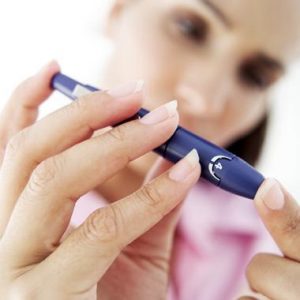
With more than 24 million diabetics and 57 million pre-diabetics in the United States, nearly a quarter of the nation’s population, there are a lot of people affected by diabetes. The prevalence of diabetes will increase by 54% to more than 54.9 million Americans between 2015 and 2030; annual deaths attributed to diabetes will climb by 38% to 385,800. In addition, the most up to date research shows the connection between dental health and diabetes has never been more critical.

As an indication of our general health, the rapidly rising rate of diabetes should be ringing alarm bells everywhere. The litany of health implications from diabetes is a long and grisly list. It is the… (Read More)

May 22, 2018

woman frowns biting into popsicleIt’s a mild spring day and you’re out with your family enjoying a delicious serving of ice cream, when all of a sudden, you feel a twinge of discomfort in your front teeth from your cold dessert. You wonder, “Why did this happen – Do I have to avoid ice cream from now on?” Your local dentist says that there are ways to address your sensitive teeth, so that you can once again enjoy life. Learn about them as you read on!
(more…)

May 21, 2018

A Harvard-led study published in the journal, Science Translational Medicine, has determined that the use of low-powered lasers can stimulate stem cells enough to regenerate and grow rat teeth and human dental tissue. This concept may seem barbaric, but it could be a metamorphic tool in the constantly evolving world of dentistry.

Researchers have been trying to figure out new ways to use the versatility of stem cells since they exist in abundance throughout the human body. Stem cells are unique in the sense that they can become different types of cells, making them prime candidates to repair or replace damaged tissue.

Although the research is still in its earliest stages and has yet to… (Read More)

May 14, 2018

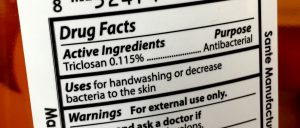
One of my great patients, Malcolm, recently sent me an article he received from his Alma Mater entitled “Risky Bristles”. Malcom wanted me to share some information with you about triclosan.

According to the Environmental Protection Agency, triclosan is an antimicrobial agent that helps to “slow or stop the growth of bacteria, fungi, and mildew.” It first started to appear in antibacterial hand soap products in the 1970’s.

Since then, according to the Center for Disease Control, “it has been used in consumer products such as detergents, soaps, skin cleansers, deodorants, lotions, creams, toothpastes, and dishwashing liquids.” Many products labeled as “antibacterial” may contain triclosan or related compounds.

One of those products that contains triclosan… (Read More)

May 7, 2018

It seems I have more and more patients telling me about their upcoming shoulder, hip, and knee replacement surgery. There are other parts that people have replaced, but those are the top three. Most of these people decide to go under the knife to improve their quality of life.

If you were born in the Paleolithic era, you could expect to live to 33 years old. The average global life expectancy in 2010 was more than double this number at 67 years. The main reasons for this are advances in hygiene, food production, and medical care.

On the bright side, if you were born in the Paleolithic era, you would most likely never need a… (Read More)

May 3, 2018

Last year I wrote a column about a study I saw in an article from over a decade ago. It was about the poor odds people have making changes in their life actually happen. The article was an outpouring of concern from healthcare experts and doctors, all looking for a way to change the behavior of people who love their lifestyle so much that they were willing to literally die from it.

In the Johns Hopkins study, 9 of 10 heart surgery patients chose to return to their unhealthy lifestyle, rather than make the changes needed to live longer. Very few were convinced by their doctors to make radical daily changes.

Based on my own… (Read More)

April 23, 2018

Many patients and dentists face a decision-making process when it comes to keeping a natural tooth with root canal therapy vs. removal of a tooth and replacing it with a dental implant. The introduction of dental implants has proven to be a pivotal technology in dentistry. In a profession that strives to help patients keep their dentition, the point when it becomes necessary to opt for dental implants is a judgment call.

So, is one treatment better than another? There have been many scientific papers written on this subject. In one more recent study published in the Journal of Dental Research, the authors noted, “Both options should be seen as complementing each other, not as… (Read More)

April 19, 2018

healthy pink gums being cleanedIt’s common, when thinking of oral care, to direct your attention to your teeth, but your gums are just as significant. That’s because they supply the blood and nutrients that are vital to sustaining the health of your teeth. Thus, your Rowley dentist wants you to know about some simple foods you can eat that will make a big impact on your soft tissues. Continue reading to learn what they are.
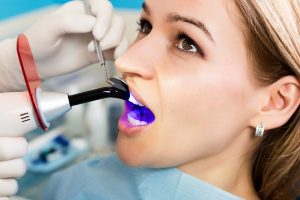
(more…)

April 17, 2018

Last week I introduced you to a patient who has been struggling with dental decay (cavities), gum recession, and dental erosion (the chemical breakdown of tooth structure). I discussed how these dental problems are complex multifactorial diseases of epidemic levels affecting both children and adults.

I ended with the idea that a healthy mouth requires more than brushing, flossing, and “fillings”. With current scientific evidence and new technologies, patients and practitioners need to begin to look at these problems not just from a drilling and filling approach, but also from a medical (preventive/therapeutic) approach. If “we” continue to think the same way about dental issues, we will continue to have the same struggles and same… (Read More)